
You bite down on a piece of ice, crunch into a popcorn kernel, or accidentally take a hard hit while playing sports. At first, you notice a little discomfort, but it doesn’t seem too serious.
A few days later, your tooth still feels sensitive when you chew. Maybe you notice a sharp pain every once in a while, or perhaps the discomfort comes and goes.
It’s tempting to wait and hope the problem resolves on its own.
Unfortunately, cracked teeth rarely heal without treatment.
Even a small crack can worsen over time, allowing bacteria to enter the tooth and increasing the risk of infection or permanent damage. The earlier a cracked tooth is diagnosed, the more treatment options are typically available.
Let’s look at what happens if you ignore a cracked tooth and why it’s important to have it evaluated as soon as possible.
What Is a Cracked Tooth?
A cracked tooth is exactly what it sounds like, a fracture in the structure of your tooth.
Some cracks are extremely small and affect only the outer enamel, while others extend deeper into the tooth and reach the sensitive inner pulp where nerves and blood vessels are located.
Not every crack is visible to the naked eye.
In fact, many patients don’t realize they have a cracked tooth until they begin experiencing pain while chewing or sensitivity to hot and cold foods.
Regardless of its size, a crack weakens the tooth and makes it more vulnerable to additional damage.
What Causes Teeth to Crack?
Teeth are incredibly strong, but they aren’t indestructible.
Several everyday situations can cause a tooth to crack, including:
- Biting hard foods such as ice, popcorn kernels, or hard candy
- Grinding or clenching your teeth while sleeping
- Sports injuries or accidents
- Large fillings that weaken the tooth over time
- Sudden changes in temperature, such as eating something hot followed by something very cold
- Normal wear and tear as we age
Sometimes a crack develops slowly over several years, while other times it can happen unexpectedly.
Common Signs of a Cracked Tooth
The symptoms of a cracked tooth aren’t always constant, which can make the problem difficult to recognize.
Some of the most common signs include:
- Sharp pain when biting down
- Pain when releasing your bite
- Sensitivity to hot or cold foods
- Pain that comes and goes
- Swelling around the affected tooth
- Difficulty chewing on one side of your mouth
Because these symptoms can resemble other dental problems, it’s important to have your tooth professionally evaluated.
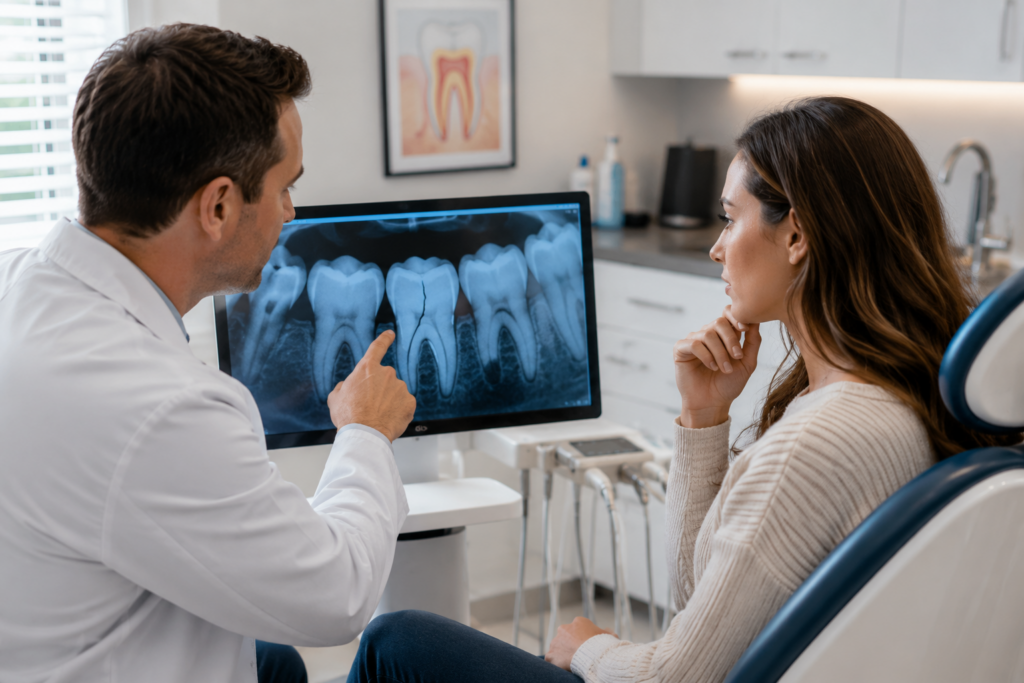
Routine Teeth Cleanings, Exams And X-Rays also give your dentist an opportunity to identify small cracks before they become larger issues.
Can a Cracked Tooth Heal on Its Own?
Unlike a broken bone, a cracked tooth cannot heal itself.
Once the enamel or inner structure of a tooth has fractured, your body cannot repair it.
In many cases, the crack gradually becomes larger every time you chew.
Even if the pain temporarily disappears, the damage may continue progressing beneath the surface.
Waiting too long often reduces the number of treatment options available and increases the likelihood that more extensive care will be needed.
The Crack May Continue to Grow
One of the biggest risks of delaying treatment is that the crack may spread.
Every time you bite, chew, or clench your teeth, pressure is placed on the weakened tooth.
Over time, this repeated stress can cause the crack to deepen or widen.
A crack that initially required only a minor restoration may eventually become severe enough to require a dental crown or other more involved treatment.
The earlier your dentist can stabilize the tooth, the better the chances of preserving its natural structure.
Bacteria Can Enter the Tooth
Cracks create tiny openings where bacteria can enter.
As bacteria work their way deeper into the tooth, they can begin affecting the inner pulp.
Once the pulp becomes infected, patients often experience:
- Constant tooth pain
- Increased sensitivity
- Swelling
- Pain while chewing
- Tenderness around the tooth
If an infection develops, Root Canals are often recommended to remove the infected tissue while saving the natural tooth.
Treating the problem before bacteria reach the pulp can often prevent more complicated procedures.
You May Eventually Lose the Tooth
One of the most serious consequences of ignoring a cracked tooth is tooth loss.
If the crack extends below the gumline or splits the tooth beyond repair, saving it may no longer be possible.
When this happens, extraction may become the healthiest option.
If a tooth cannot be preserved, Dental Implants In Winchester may be recommended to restore both the appearance and function of your smile.
Fortunately, many cracked teeth can be successfully treated when they’re addressed early.
Pain Usually Gets Worse Over Time
Some cracked teeth cause only occasional discomfort at first.
Many patients assume the problem isn’t serious because the pain comes and goes.
Unfortunately, this temporary relief can be misleading.
As the crack grows or bacteria reach deeper layers of the tooth, pain often becomes more frequent and more intense.
What begins as mild discomfort while chewing may eventually become constant pain that affects your daily activities.
Seeking treatment sooner rather than later can help prevent unnecessary discomfort.
How Are Cracked Teeth Treated?
Treatment depends on the size, location, and severity of the crack.
Your dentist may recommend:
- Monitoring very small surface cracks
- Tooth Colored Fillings to restore minor damage
- A dental crown to strengthen and protect the tooth
- Root Canals if the pulp has become infected
- Extraction only if the tooth cannot be saved
Every situation is different, which is why a thorough dental examination is so important.
The sooner the crack is identified, the more conservative the treatment often can be.
When Should You See a Dentist?
It’s best to schedule an appointment anytime you suspect a cracked tooth.
You should be evaluated promptly if you notice:
- Pain while chewing
- Sharp pain when biting down
- Sensitivity that doesn’t improve
- A visible crack or chip
- Swelling around the tooth
- Persistent discomfort
Delaying treatment may allow the crack to worsen and reduce the chances of saving the tooth.
Why Patients Trust Tolley Dental
At Tolley Dental, we understand how stressful unexpected tooth pain can be.
Our experienced team uses comprehensive examinations and advanced diagnostic technology to identify cracked teeth and recommend treatment based on your individual needs.
Whether your tooth requires a simple restoration or more advanced care, we’re committed to helping patients throughout Woodstock, Winchester, and the surrounding communities protect their oral health in a comfortable and welcoming environment.
Don’t Wait to Treat a Cracked Tooth
A cracked tooth may seem like a small problem today, but it can quickly develop into something much more serious if left untreated.
Early diagnosis can often mean simpler treatment, less discomfort, and a better chance of saving your natural tooth.
If you’ve noticed pain while chewing, increased sensitivity, or think you may have cracked a tooth, don’t wait.
Visit our Contact Us page or call Tolley Dental today to schedule an appointment. Our team will evaluate your tooth, explain your treatment options, and help you restore a healthy, confident smile. 🦷