
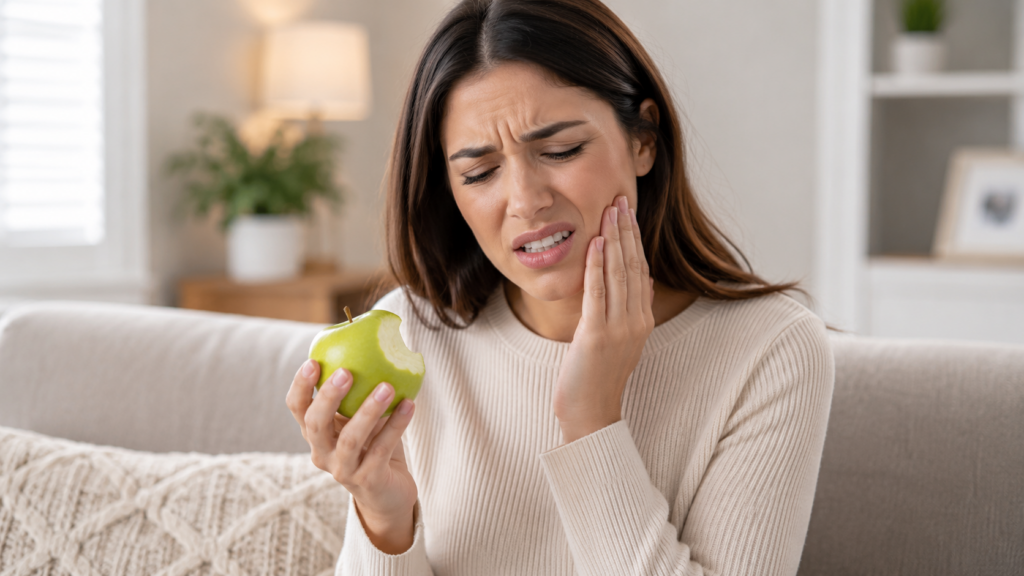
You’re eating dinner, enjoying your favorite snack, or simply biting into an apple when suddenly you feel a sharp pain in one of your teeth.
Maybe the pain only happens when you chew on one side of your mouth. Perhaps it’s a dull ache that lingers after you bite down, or maybe it comes and goes without warning.
Whatever you’re experiencing, tooth pain while biting down is something you shouldn’t ignore.
Although there are several possible causes, pain when chewing is often a sign that a tooth or the surrounding tissues need attention. The good news is that many of these issues are highly treatable, especially when they’re diagnosed early.
Let’s take a closer look at some of the most common reasons your tooth may hurt when you bite down and what your dentist can do to help.
A Cavity May Be Getting Worse
One of the most common reasons for pain while chewing is tooth decay.
Cavities usually begin as small areas of enamel damage that don’t cause any symptoms. As decay progresses deeper into the tooth, it gets closer to the sensitive inner layers where nerves are located.
Once this happens, biting down may become uncomfortable or even painful.
You might notice pain when eating sweets, chewing hard foods, or drinking something cold.
Routine Teeth Cleanings, Exams And X-Rays allow your dentist to detect cavities early, often before they begin causing pain.
If decay is caught in its early stages, it can frequently be treated with simple Tooth Colored Fillings, helping preserve more of your natural tooth structure.
You May Have a Cracked Tooth
Not every crack is visible.
A tooth can develop tiny fractures from years of chewing, biting down on hard foods, sports injuries, or even nighttime teeth grinding.
Even a hairline crack can cause significant discomfort because the tooth flexes slightly every time you bite down.
Common signs of a cracked tooth include:
- Sharp pain when chewing
- Pain that comes and goes
- Sensitivity to hot or cold foods
- Pain when releasing your bite
- Discomfort that seems difficult to pinpoint
Unfortunately, cracked teeth rarely heal on their own.
Without treatment, the crack can become larger over time and may eventually threaten the health of the entire tooth.
An Old Filling Could Be Wearing Out
Dental fillings are durable, but they don’t last forever.
Over time, fillings may wear down, crack, or separate slightly from the tooth.
When this happens, bacteria can enter beneath the restoration and begin causing new decay.
A damaged filling may also change how your teeth come together when you bite, causing pressure and discomfort.
The good news is that replacing an aging filling is often a relatively simple procedure that can prevent much larger problems later.
A Tooth Infection May Be Developing
Sometimes pain while biting is a sign that bacteria have reached the inner pulp of the tooth.
Inside every tooth are nerves and blood vessels. If bacteria reach this area through deep decay or a crack, an infection can develop.
Symptoms often include:
- Persistent tooth pain
- Pain that worsens while chewing
- Sensitivity to hot or cold temperatures
- Swollen gums
- A bad taste in your mouth
- Facial swelling in more advanced cases
When an infection reaches the pulp, Root Canals are often the best way to remove the infected tissue while saving the natural tooth.
Seeking treatment early can prevent the infection from spreading and reduce the likelihood of needing more extensive treatment.
Gum Disease Can Cause Pain When Chewing
Sometimes the tooth itself isn’t the problem.
The gums and bone surrounding your teeth provide support every time you chew.
If gum disease develops, these tissues become inflamed and weakened, making biting uncomfortable.
Signs of gum disease may include:
- Red or swollen gums
- Bleeding while brushing or flossing
- Persistent bad breath
- Gum recession
- Loose teeth
- Tenderness while chewing
Routine Periodontal Care can help manage gum disease before it progresses into more serious stages that threaten the stability of your teeth.
Teeth Grinding Can Put Extra Pressure on Your Teeth
Many people grind or clench their teeth without realizing it.
This condition, known as bruxism, often happens during sleep and can place hundreds of pounds of pressure on your teeth every night.
Over time, grinding may lead to:
- Tooth soreness
- Worn enamel
- Tiny cracks
- Jaw pain
- Headaches
- Increased sensitivity when biting
If teeth grinding is contributing to your discomfort, your dentist can recommend solutions to help protect your teeth from further damage.
Sometimes It Isn’t Your Tooth at All
Believe it or not, not all tooth pain originates inside the tooth.
A sinus infection can sometimes create pressure in the upper jaw, especially around the molars.
Because the roots of these teeth sit close to the sinus cavities, inflammation can make them feel sore when chewing or biting down.
If you’ve recently had congestion, facial pressure, or seasonal allergies along with tooth discomfort, your dentist can help determine whether the pain is dental or sinus-related.
Your Bite May Be Slightly Off
Sometimes a tooth hurts simply because it’s receiving more pressure than it should.
This can happen after a filling, crown, or other dental restoration if your bite isn’t perfectly balanced.
Even a tiny difference in height can cause one tooth to absorb more force than the others every time you chew.
Fortunately, adjusting your bite is often a quick procedure that provides immediate relief.
What Happens If You Ignore Tooth Pain?
Many people hope the pain will simply go away.
Sometimes it does, for a while.
Unfortunately, the underlying problem often continues to worsen.
A small cavity may grow larger.
A cracked tooth may split further.
An infection can spread deeper into the tooth and surrounding tissues.
Gum disease can continue damaging the bone that supports your teeth.
The longer treatment is delayed, the more complicated and costly it may become.
Addressing tooth pain early usually results in simpler treatment and a better long-term outcome.
How Does a Dentist Find the Cause?
Tooth pain isn’t always obvious from the outside.
During your appointment, your dentist will carefully evaluate your symptoms and perform a comprehensive examination.
This may include:
- Examining your teeth and gums
- Taking digital X-rays
- Checking your bite alignment
- Looking for cracks or damaged restorations
- Testing the tooth’s sensitivity
Once the source of the discomfort has been identified, your dentist can recommend the treatment that’s most appropriate for your situation.
An accurate diagnosis is one of the most important steps toward lasting relief.
How Is Pain While Biting Treated?
Treatment depends entirely on what’s causing the discomfort.
Your dentist may recommend:
- Tooth Colored Fillings to repair cavities
- Replacing old or damaged fillings
- Root Canals for infected teeth
- Periodontal Care to treat gum disease
- Bite adjustments to relieve excess pressure
- A dental crown to strengthen a weakened or cracked tooth
The sooner treatment begins, the greater the chance of preserving your natural tooth and avoiding more extensive procedures.
Why Patients Trust Tolley Dental
At Tolley Dental, we understand how frustrating tooth pain can be.
Our team takes the time to identify the underlying cause of your discomfort rather than simply treating the symptoms. We believe every patient deserves personalized care, clear communication, and treatment recommendations that support long-term oral health.
Whether your discomfort is caused by a cavity, cracked tooth, infection, gum disease, or another dental concern, we’re proud to help patients throughout Winchester, Woodstock, and the surrounding communities restore healthy, comfortable smiles.
Don’t Ignore Tooth Pain
Pain when biting down is your body’s way of telling you that something isn’t right.
In many cases, early diagnosis and treatment can prevent more serious dental problems while helping you save your natural tooth.
If you’ve been experiencing pain while chewing or biting down, don’t wait for the problem to get worse.
Visit our Contact Us page or give Tolley Dental a call today to schedule an appointment. Our team will identify the cause of your discomfort and help you get back to eating, smiling, and living comfortably. 🦷